
Chapter I
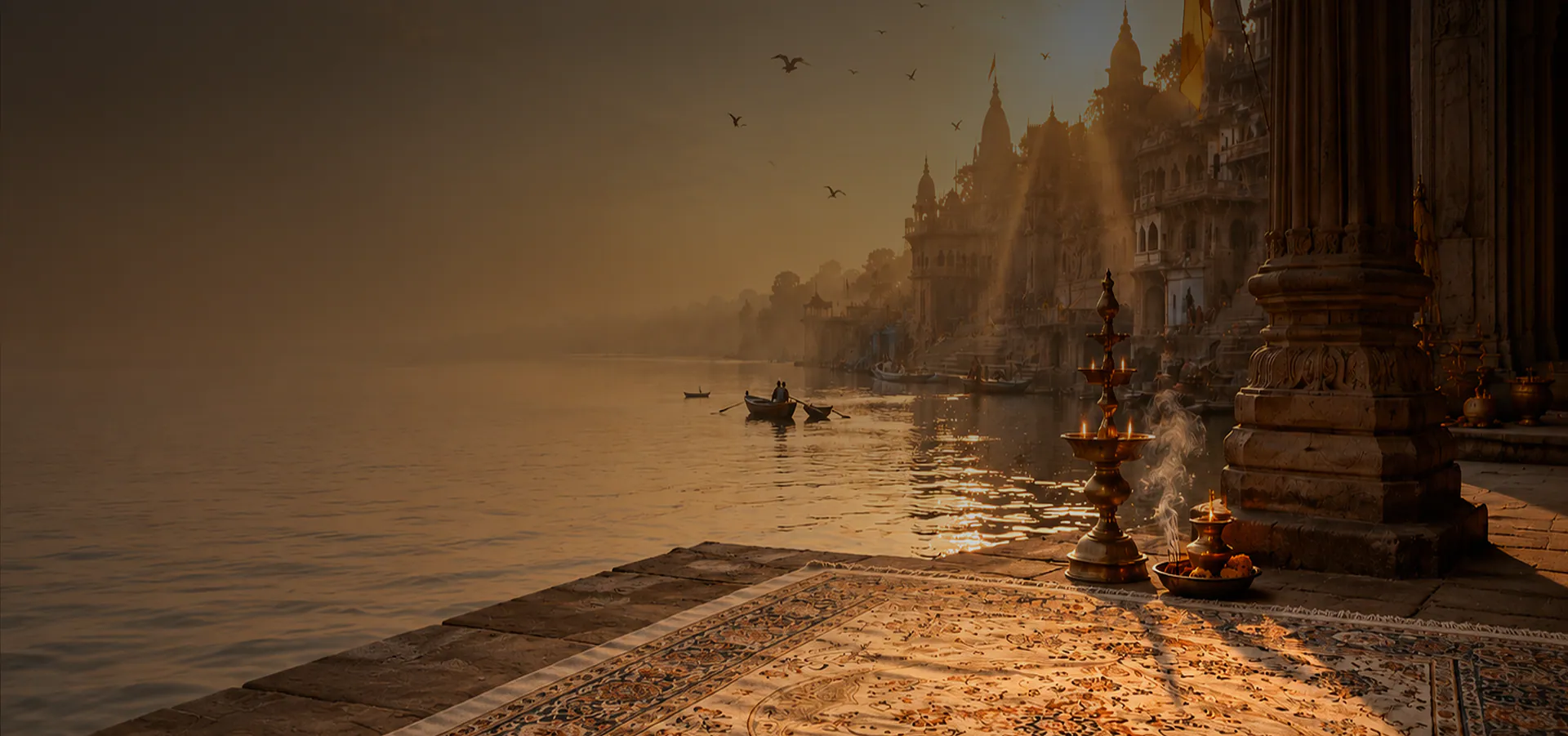
Bhadohi, India — Since Three Generations
For three generations, our master weavers have transformed silk, wool, and story into rugs that outlive the rooms they furnish.
01 — The Collection
Each collection is named for the light that imposed it — a single idea, rendered in wool and silk across a hundred knots per inch.
02 — The Atelier
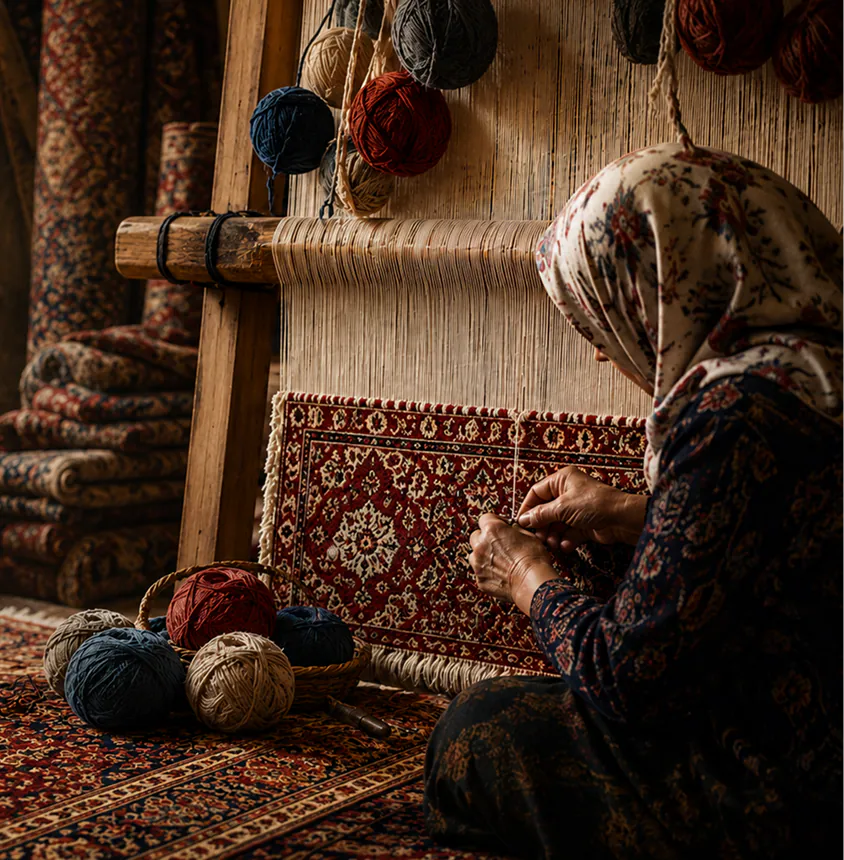
No two rugs leave our atelier the same. A single piece may occupy a loom for four to nine months, tied knot by knot by hands that learned the craft from their mothers, and theirs before them.
We work only in hand-carded wool, mulberry silk, and vegetable dye — nothing that cannot be traced to a single village, a single family, a single loom.
The Process
Every knot is tied by hand, knot by knot and row by row, at up to 400 knots per square inch.
The reverse is carefully singed before the rug is river-washed and sun-dried to remove impurities, soften the fibres, and settle the dyes.
The washed rug is stretched and aligned by hand to restore precise dimensions and ensure an even, balanced shape.
The pile is hand-clipped, the edges are bound, both surfaces are cleaned, loose threads are trimmed, and the rug is thoroughly vacuumed.
Each piece is inspected by three artisans before it earns our mark.
03 — Our World
Varanasi, Uttar Pradesh
In the quiet hours before sunrise, the looms begin their slow arithmetic. A weaver ties, on average, eleven thousand knots before lunch — a rhythm passed down rather than taught.

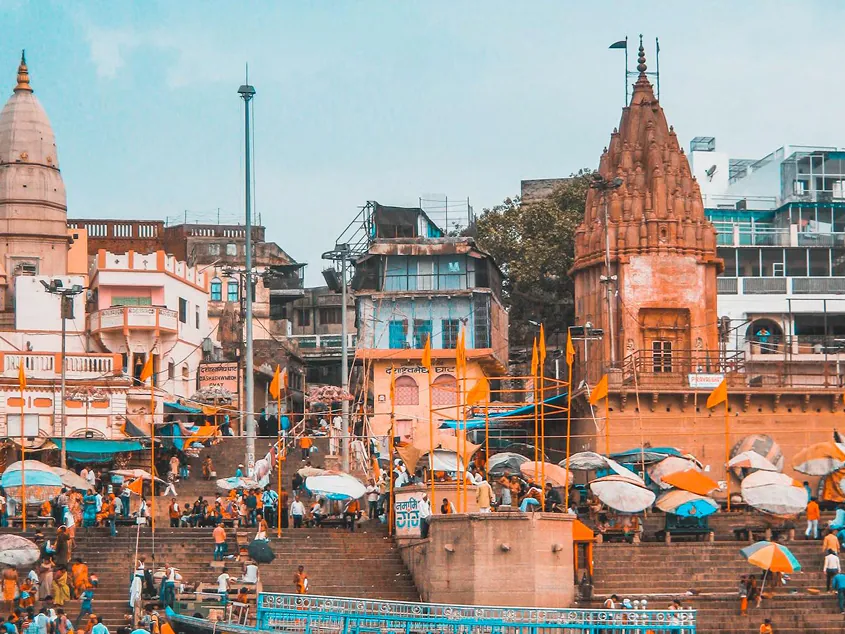
The Ganges Riverbank
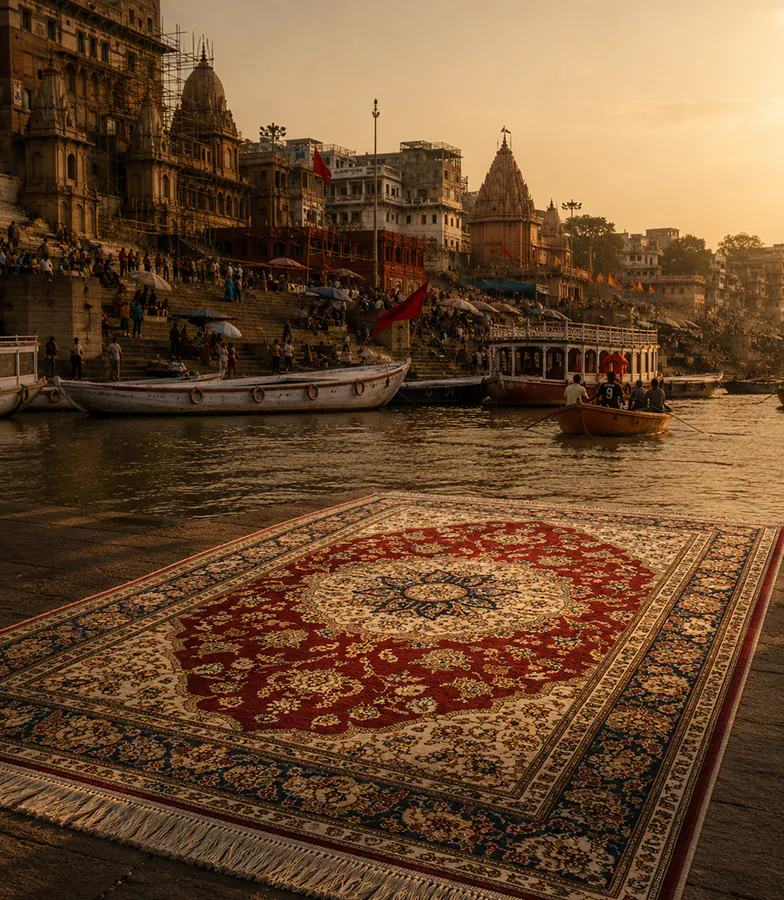
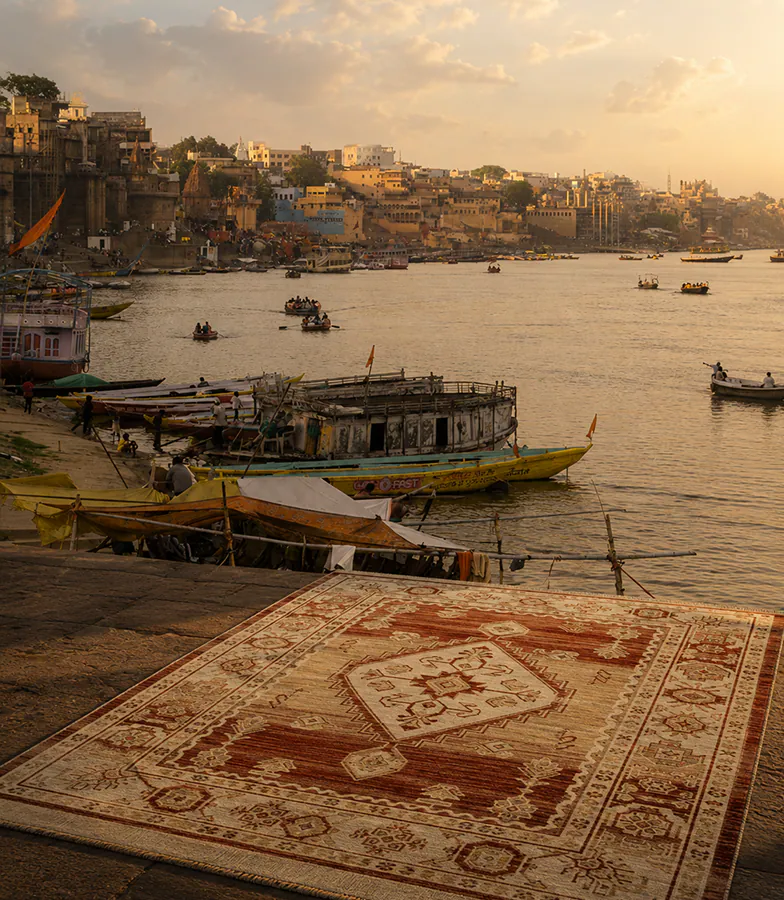
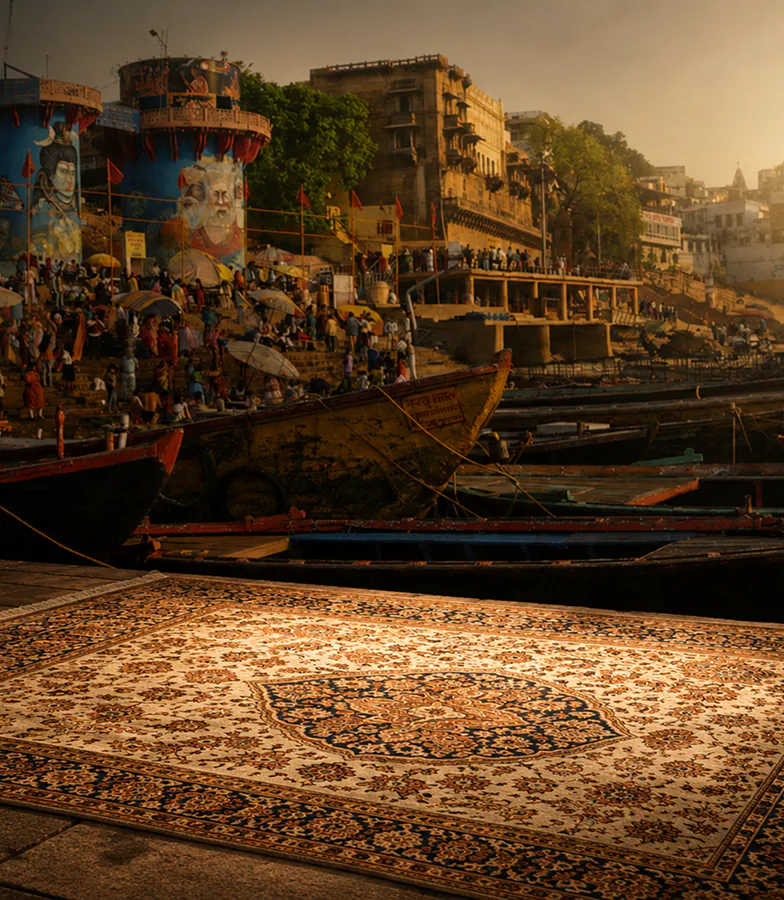
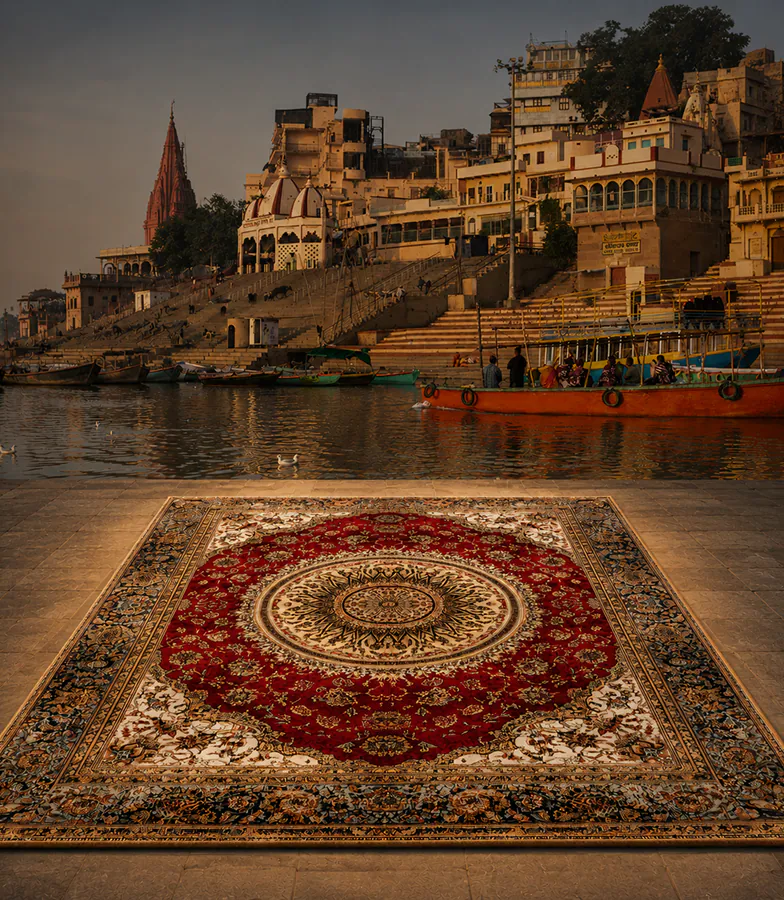
Every rug is washed by hand along the riverbank, a final rite that softens the pile and reveals the depth of vegetable dye for the first time.
04 — Heritage
Raw wool was sourced from Panipat and Bikaner, brought to Bhadohi, and supplied to local manufacturers. A single loom was then installed, marking the beginning of our own production house.
An in-house hand-dyeing unit was established and the design process was codified. More looms followed, and the atelier grew to seventeen master weavers.
A private residence in London becomes the first piece to leave India for a Western interior.
Rugs De Indiska Pvt. Ltd. now furnishes private collections across five continents, each piece still tied by hand.
05 — Words from Collectors
“It doesn’t feel like a purchase. It feels like something entrusted to keep for a while.”
“The colour has a depth I’ve never seen in a rug — it changes with the hour of the day.”
“Eight months for one rug. I understood the wait the moment I walked into it barefoot.”
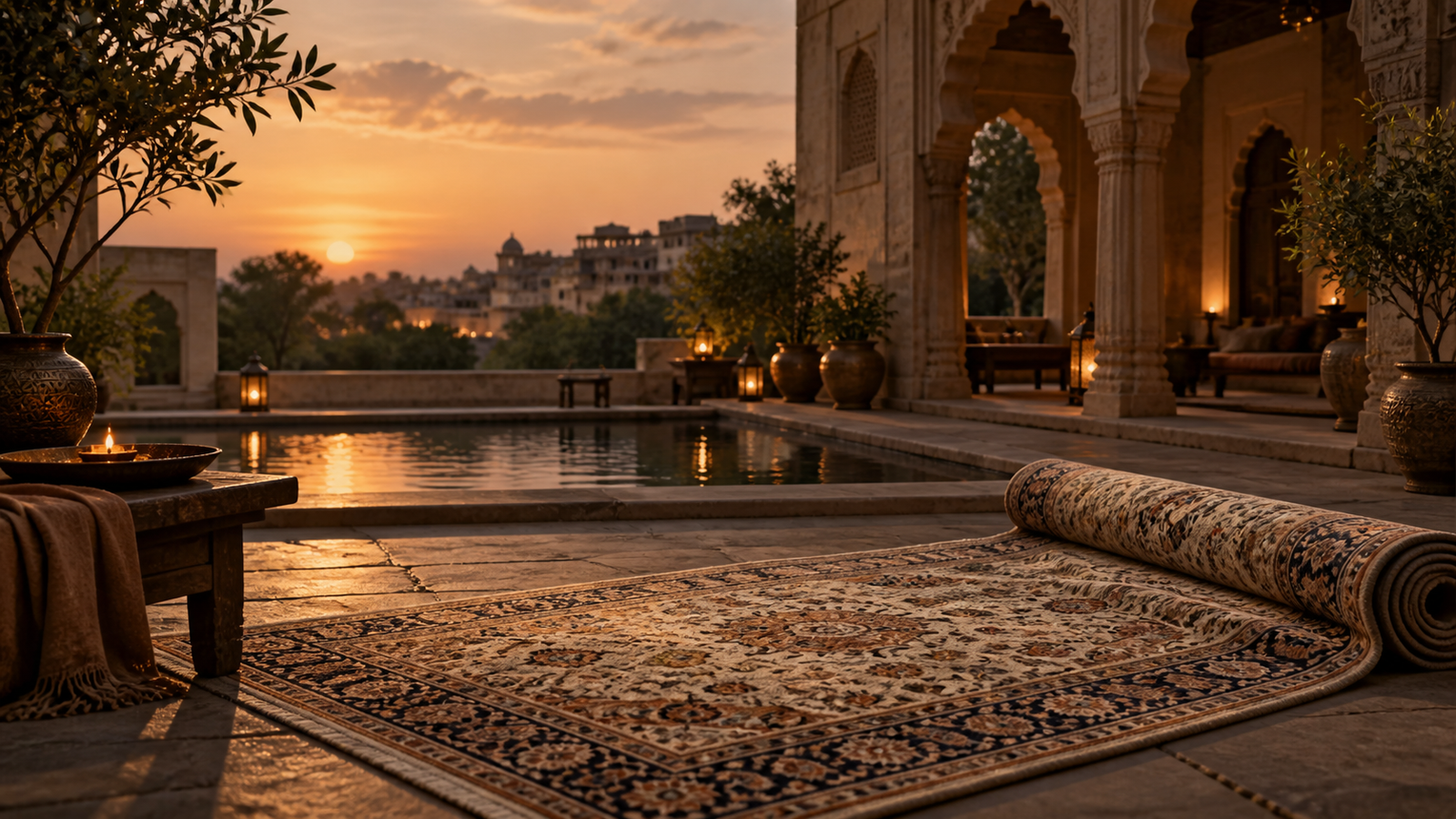

Explore the atelier's signature language of wool, silk, and hand-tied detail, then begin a private conversation around the piece your space deserves.